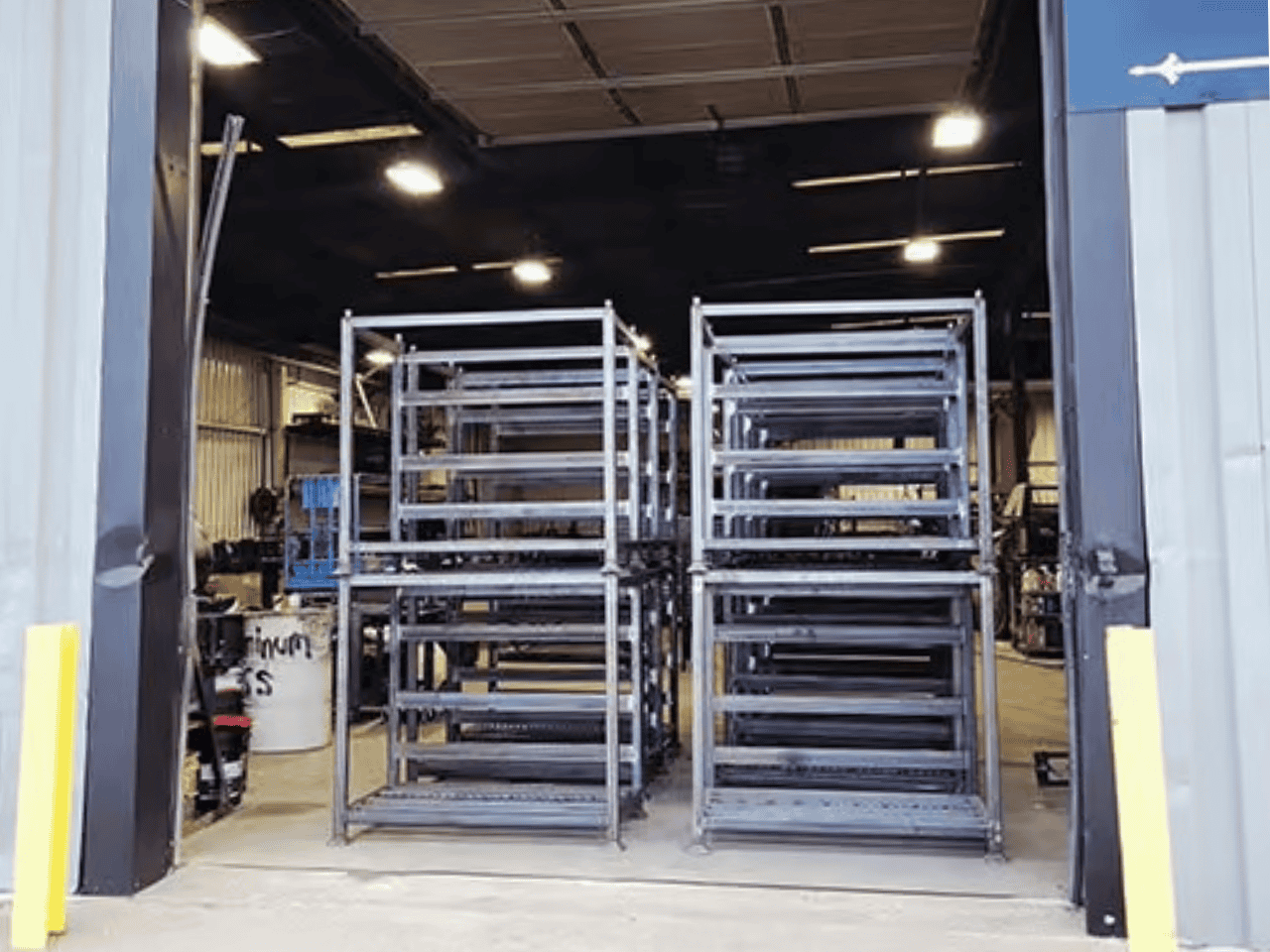
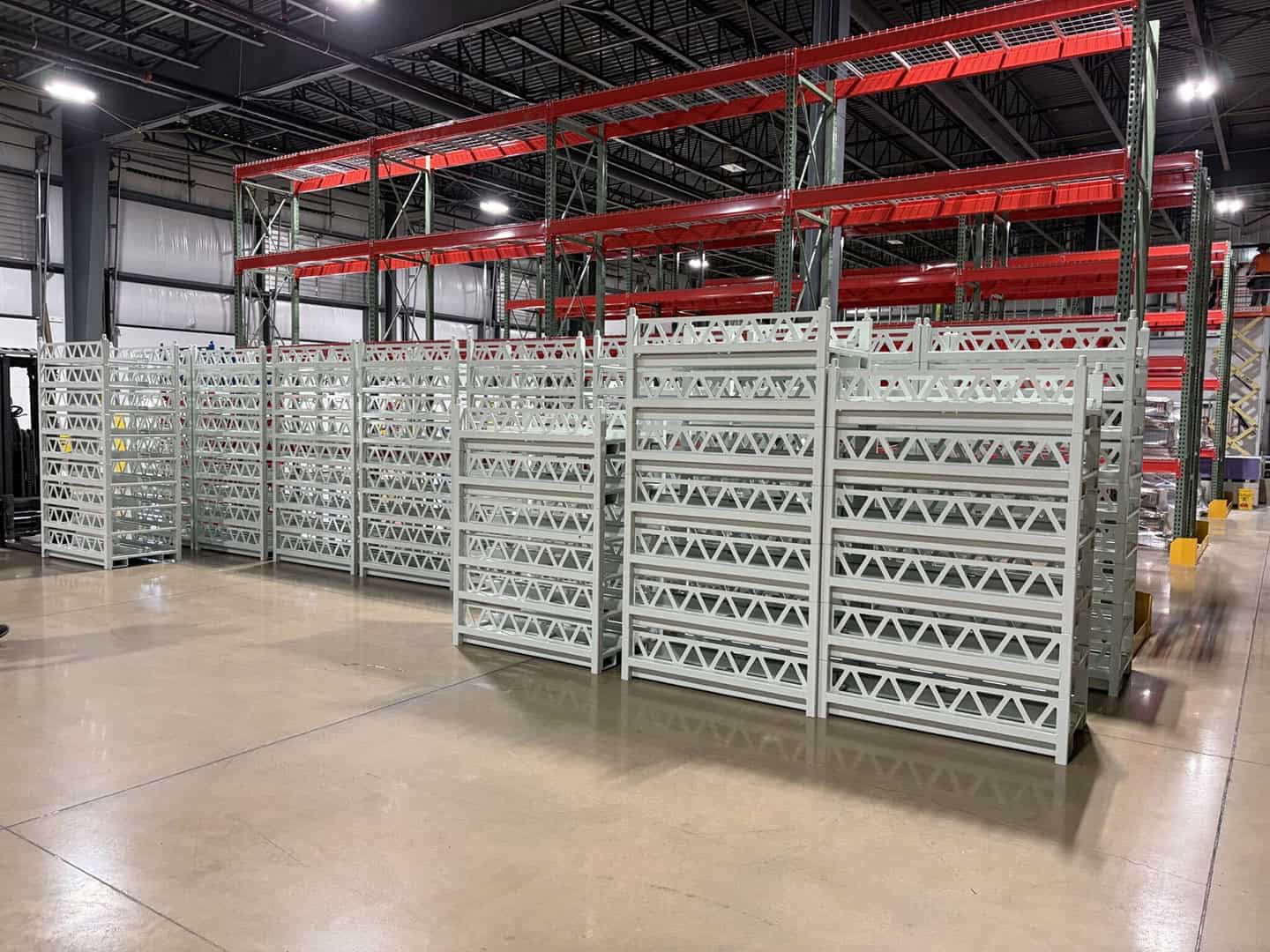
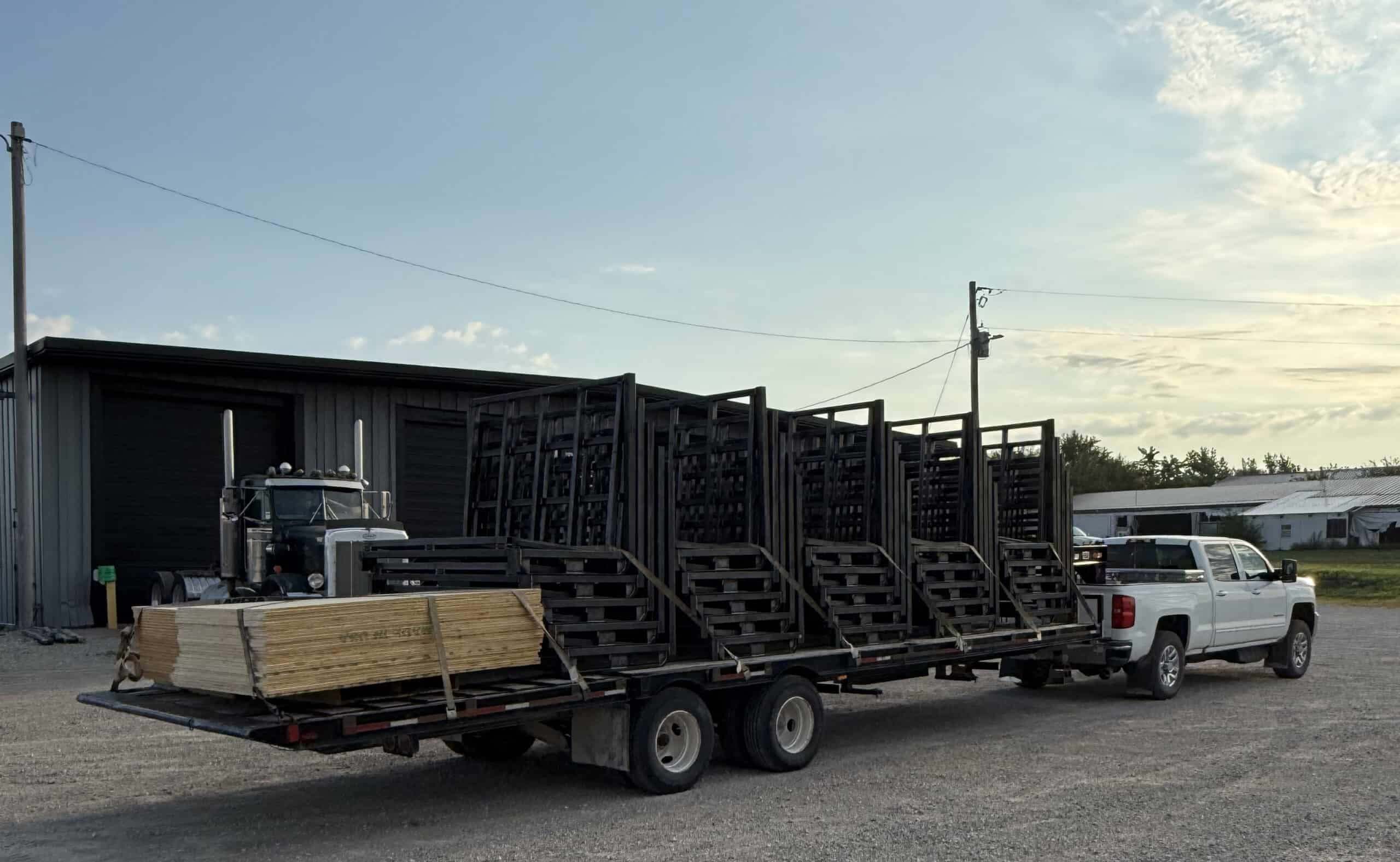
A metal rack looks simple on paper. Some tube, a few bends, a shelf or two, maybe a coat of powder. But the gap between a clean CAD drawing and a rack that survives years of loading docks, forklifts, and daily abuse is wider than most people expect. That gap is exactly why prototyping and First Article Inspection (FAI) exist — and why skipping them is one of the most expensive mistakes a company can make before a single production unit ever ships.
At Wertzbaugher Services, we don’t treat prototyping as a formality. We treat it as the moment where a design either proves itself or reveals its problems — while the fix still costs a few dollars in material instead of a few thousand in scrapped inventory.
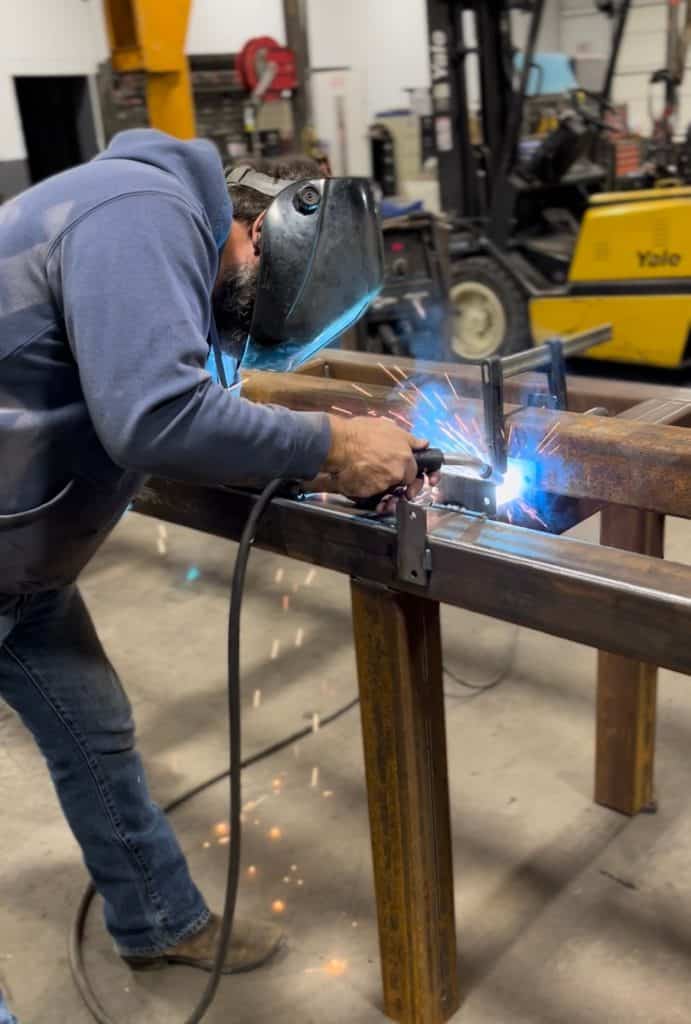
Design for Manufacturing: Catching Problems Before They’re Welded In
Every rack design carries assumptions. Assumptions about how a bend will spring back, how a weld will pull a frame out of square, how a load will actually distribute once product sits on the shelf instead of a spec sheet. Design for Manufacturing (DFM) is the discipline of stress-testing those assumptions before they’re locked into tooling and repeated a hundred times over.
This is where a prototype earns its keep. Building one unit tells us whether:
- The frame holds its geometry after welding, or whether fixturing needs to change
- Access points for hardware, casters, or fasteners are actually reachable once the structure is assembled
- The rack can be built consistently, at speed, by the people who will be building it every day
A design that looks efficient on a drawing but fights the fabricator at every step isn’t efficient at all. It’s a liability waiting to show up in your delivery schedule.
Material and Gauge Selection: Right-Sized, Not Guessed
Overbuilt racks waste material, add weight, and drive up cost for no functional gain. Underbuilt racks fail — sometimes safely, sometimes not. The only way to know you’ve landed in the right place is to build the thing and load it.
Prototyping lets us validate gauge and material choice against real-world forces instead of theoretical ones:
- Does 14-gauge steel actually outperform 11-gauge here, or is it just cheaper and unproven?
- Does aluminum make sense where weight matters more than raw strength?
- Where does the rack actually flex, and is that flex a problem or simply part of how the structure is meant to behave?
A prototype turns material selection from a guess into a verified decision — one you can stand behind when a customer asks why the rack is built the way it is.
Prototyping Methods: Proving the Process, Not Just the Part
A rack isn’t just a shape — it’s a process. The bending sequence, the weld order, the jigs and fixtures that hold everything in place: all of it has to be proven out before it’s repeated at volume. This is where prototyping methods matter as much as the prototype itself.
At Wertzbaugher Services, we build first articles the same way we’ll build production units — same equipment, same techniques, same hands. That means:
- Bending sequences are tested for spring-back and consistency before they’re standardized
- Weld fixtures are validated to hold tolerance across multiple builds, not just the first one
- Assembly steps are timed and refined so the process is repeatable, not just possible
If a method only works once, in perfect conditions, in the hands of one skilled welder, it isn’t a production process. It’s a fluke. Prototyping is how a fluke becomes a standard.
Hardware & Tolerancing: Where Good Designs Go Wrong
More racks fail at the hardware level than at the weld. Bolt patterns that don’t line up after a bend. Casters that bind because a frame is a sixteenth of an inch out of square. Shelving that doesn’t seat flush because tolerances stacked up in the wrong direction across a dozen dimensions.
A prototype exposes every one of these issues while they’re still cheap to fix. First Article Inspection is where we confirm the fix worked — measuring the built part against the engineering drawing, checking every critical dimension, and verifying that hardware fits and functions exactly as intended, not just approximately.
This is not a rubber stamp. It’s a deliberate, in-person walkthrough of the part before it becomes a hundred parts.
Why In-Person First Article Inspection Matters
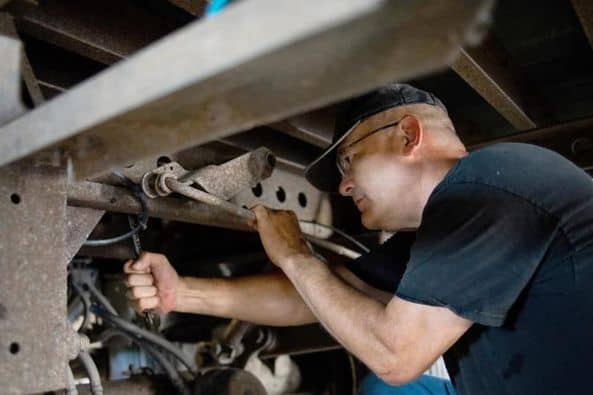
A photo can hide a lot. A tolerance report can miss context that a trained eye catches in seconds — a weld that’s technically in spec but sits in a way that will fatigue under repeated loading, a bend radius that measures correctly but binds a moving part. In-person FAI puts engineering intent, real material behavior, and hands-on inspection in the same room at the same time.
That’s the whole point. A prototype and an FAI aren’t steps you take to slow a project down. They’re how you make sure the thousand racks that follow the first one don’t carry a problem you could have caught for the cost of one part.
Built Right, From the First Article to the Last
At Wertzbaugher Services, we don’t send a design to full-scale production until it’s proven itself — in the shop, under real fabrication conditions, and under our own inspection. That’s how we deliver custom metal racks, glass transport racks, and industrial storage systems that hold up in the field, not just on paper.
Have a rack concept that needs engineering review or prototype validation? Contact Wertzbaugher Services to discuss your project.