Glass doesn’t give second chances. Neither does gravity.
Every time a worker moves a large glass panel without the right equipment, they’re placing a bet against physics — and physics always wins. A single sheet of architectural glass can weigh hundreds of pounds. If it shifts, slips, or shatters during transport, the consequences aren’t a bruise and a near-miss story. They’re lacerations deep enough to sever tendons. Crush injuries that take months to heal. Emergency surgeries. And in the most tragic cases, fatalities.
Transporting glass is high risk. That isn’t a caveat buried in a safety manual. It’s a fact that every shop owner, glazier, and warehouse operator needs to confront head-on — and then do something about.
An Injury Isn’t Just an Incident. It’s a Catastrophe.
Consider what actually happens when a glass transport accident occurs. Injuries from accidents can be life threatening — and even when they aren’t fatal, they’re devastating. A worker recovering from severe lacerations or a crushed hand isn’t back on the floor in a day or two. Injuries can result in weeks of downtime from work: weeks without income for the worker, weeks of disrupted operations for the business, weeks of insurance claims, medical bills, and investigations. And none of that accounts for the human cost — the person who can’t lift their child because of nerve damage, or who faces a long rehabilitation wondering if they’ll ever return to full capacity.
The financial toll ripples out fast. Worker’s compensation claims. Temporary labor to fill the gap. Potential OSHA investigations and fines. Legal exposure. The kind of workplace atmosphere that makes the remaining crew fearful every time they approach a glass panel.
This is entirely preventable. And it starts with using the right equipment.
Glass Racks Built for the Real World
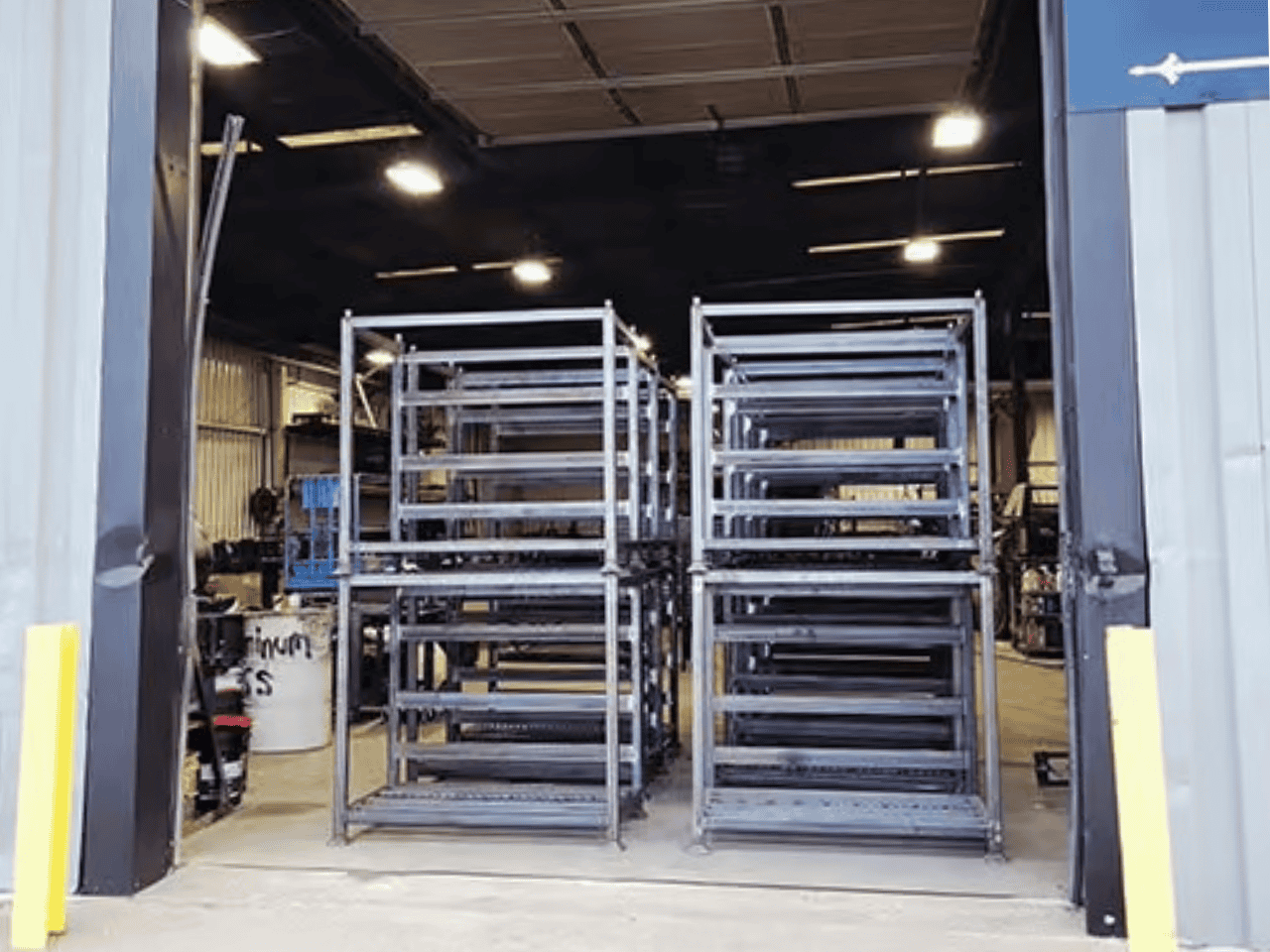
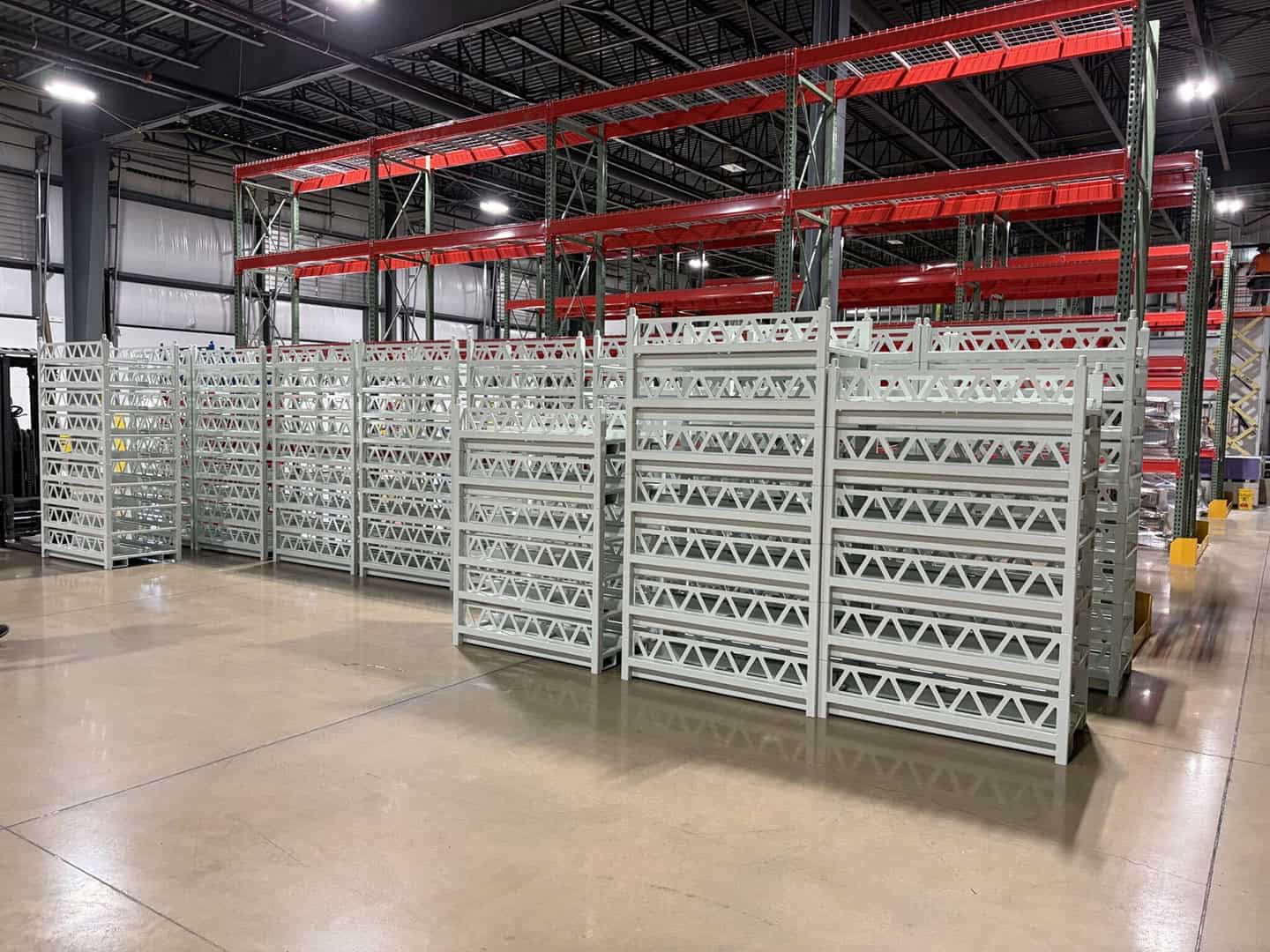
The glass industry has engineered solutions that turn one of the most hazardous material-handling tasks into a controlled, manageable operation — but only when the right racks are specified and used correctly. Understanding what separates a professional-grade glass rack from an inadequate one is the first step toward building a genuinely safe operation.
Capacity and mobility go hand in hand. Large, high-capacity racks can be made with casters to make rolling easier, and this single feature changes the entire risk profile of moving glass. Without casters, moving a loaded rack requires lifting, dragging, or carrying — all of which introduce unpredictable forces, fatigue, and the very real possibility of losing control of a load that weighs as much as a small car. Heavy-duty casters rated for the full loaded weight of the rack allow workers to guide panels smoothly across concrete floors, through shop doors, and onto loading docks with precision and control. The difference between rolling a loaded rack and carrying a massive glass panel isn’t just convenience — it’s the difference between a manageable task and a dangerous one.
Caster quality matters as much as caster presence. A rack built on undersized or low-quality wheels creates new hazards: casters that lock up on uneven flooring, wheels that flatten under heavy loads, swivel mechanisms that make steering unpredictable. Professional glass racks are built with casters matched to the rack’s maximum load capacity, with locking mechanisms that hold the rack firmly in place during loading and unloading. That stability isn’t a nice-to-have. It’s what keeps a loaded rack from rolling while a worker is positioning a panel against it.
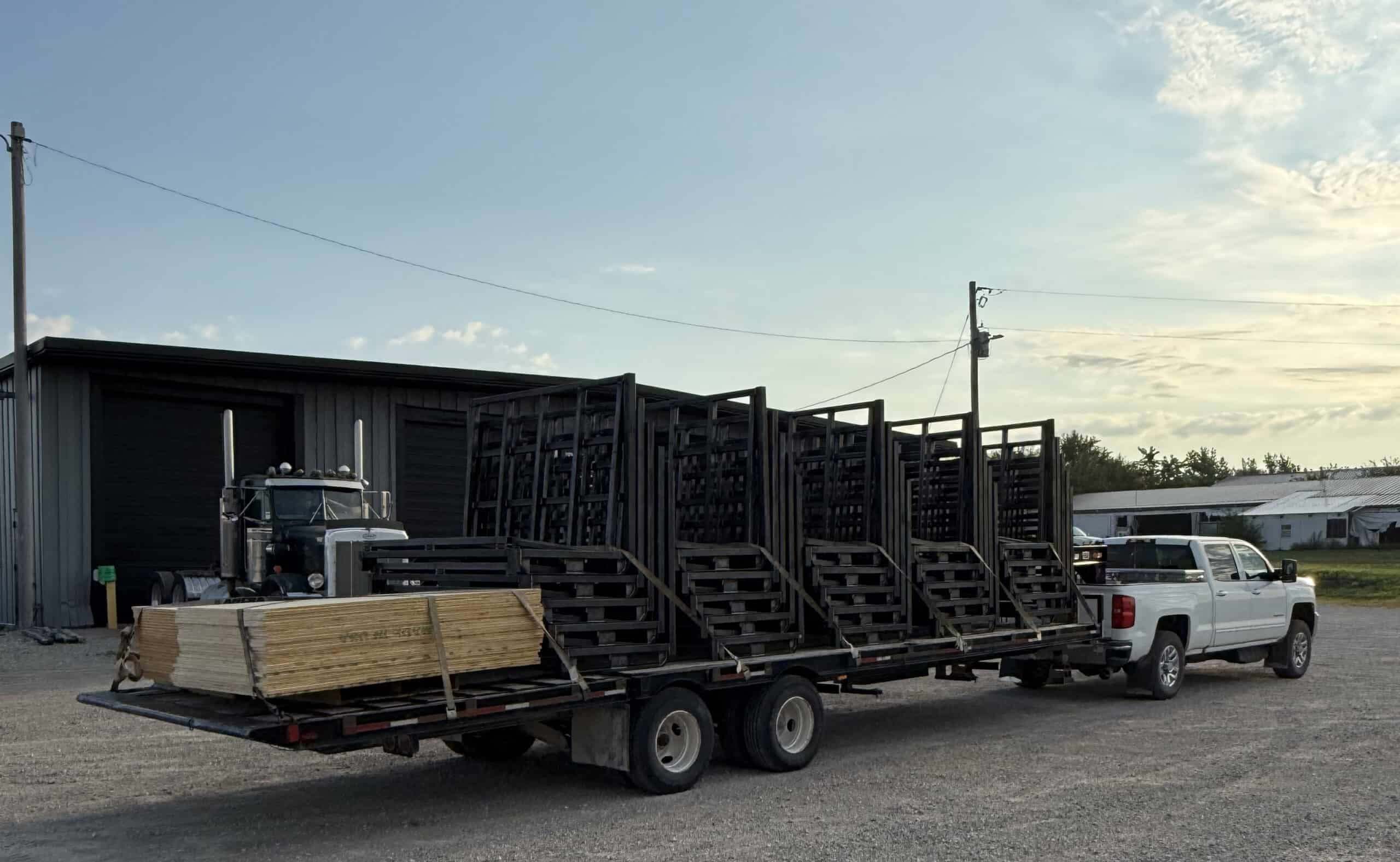
Strapping is where many operations cut corners — and where accidents happen. Racks can be customized with various types of strapping to keep glass panels secured against movement during transport. Ratchet straps provide high-tension hold for heavy loads. Cam buckle systems offer faster adjustment for operations that load and unload frequently throughout the day. Foam-lined or padded retention systems protect glass edges and surfaces while maintaining firm contact. The right configuration depends entirely on what’s being transported: the weight of the panels, their dimensions, whether they’re tempered or laminated, and how far they’re being moved. A rack configured for short in-shop moves may be entirely inadequate for road transport. A strapping system designed for standard residential glass may fail catastrophically under the weight of a large commercial panel. Customizing the strapping to the actual loads being carried isn’t over-engineering — it’s basic due diligence.
Then there’s the engineering principle that defines professional glass rack design: glass racks are made with a 5-degree lean to tilt the large glass plates so they lean against the rack. This isn’t arbitrary. When a glass panel leans inward at five degrees, its own weight works against the possibility of tipping forward. The panel presses into the rack’s support structure rather than pulling away from it, creating stable, continuous contact across the full height of the glass. The result is a load that becomes more secure as weight increases, rather than one that grows more unstable. That 5-degree lean is the difference between glass that rides safely and glass that shifts, rocks, and eventually falls. It’s a feature that should be non-negotiable in any rack specified for serious glass transport work.
Customization ties all of these elements together. No two glass operations run the same loads. A fabrication shop moving standard residential lites has different requirements than a commercial glazier handling oversized architectural panels. Rack width, height, base footprint, divider spacing, caster load rating, and strapping configuration should all be matched to the specific panels a business regularly handles. A rack built to your actual loads doesn’t just perform better — it protects better, because every design element is calibrated to the real-world demands your crew faces every day.
Safety Just Isn’t a Policy. It’s Equipment.
There’s a persistent and dangerous misconception in trades environments that safety is primarily a culture problem — that the right posters, the right meetings, and the right attitude are what separate safe operations from dangerous ones. Culture matters. Training matters. But when it comes to glass handling, no amount of safety culture overcomes the physics of an improperly secured panel or an unstable rack. The foundation of glass transport safety isn’t attitude. It’s equipment.
Think about what workers are actually being asked to manage when they move large glass panels. They’re controlling loads that are heavy, fragile, awkward, and unforgiving of mistakes. A panel that begins to tip gives almost no warning and almost no time to react. A sheet of glass that falls doesn’t crumple or bounce — it shatters explosively, sending shards in every direction. The human body is not equipped to manage these dynamics through technique alone, no matter how experienced the worker. The equipment has to do the heavy lifting — literally and figuratively — by eliminating the conditions where accidents occur in the first place.
The workers who move glass every day are skilled professionals performing genuinely dangerous work. They deserve equipment that matches the seriousness of that work. When a business runs glass transport on inadequate racks, it isn’t just cutting corners on equipment — it’s transferring risk onto the bodies of the people doing the job. That’s not acceptable. The cost of a properly built, properly specified glass rack is trivial compared to the cost of a single serious injury. It’s not even a close comparison.
Build the Operation That Brings Everyone Home
The standard for glass transport safety isn’t complicated, but it requires commitment. It requires buying racks built for real loads, not whatever happens to be available. It requires specifying casters rated for the weight, strapping configured for the panels, and the engineered lean that keeps glass stable from the first move to the last. It requires matching the equipment to the actual work being done, not hoping that close enough will hold.
Every operation that moves glass is one inadequate rack away from an injury that changes someone’s life. The weeks of lost work that follow a serious accident aren’t statistics — they’re a real person who can’t pay their mortgage, can’t pick up their kids, and isn’t sure when or whether they’ll be back. The life-threatening injuries that come from glass transport accidents don’t announce themselves in advance. They happen fast, without warning, and they happen most often when the equipment wasn’t up to the job.
You can’t build a safe glass operation on good intentions alone. You build it on casters that roll true under full load. On strapping systems matched to the panels your crew actually handles. On racks with the 5-degree lean that uses physics instead of luck to keep glass where it belongs. On the understanding that your crew’s safety is a direct result of the equipment decisions you make before they ever touch a panel.
Make those decisions right. Invest in racks built for the work. Because a glass operation that brings every worker home at the end of every shift isn’t an accident — it’s the result of taking equipment seriously, every single time.