Every fleet manager knows the drill. Your drivers are pushing hard to meet delivery windows; your trailers are logging thousands of miles weekly, and maintenance always seems to fall to the bottom of the priority list. But here’s the truth that’s costing your operation thousands in avoidable repairs, dangerous roadside breakdowns, and liability exposure: neglecting trailer maintenance isn’t just irresponsible—it’s a financial disaster waiting to happen.
The Price of “Just One More Load”
When was the last time you actually took a hard look at your fleet’s trailer maintenance records? Not the paperwork that gets rubber-stamped, but the real, boots-on-the-ground inspection that catches problems before they become catastrophes? If you’re like most commercial operations, the answer is uncomfortable.
Consider this: a single blown tire on the highway doesn’t just cost you the tire. You’re paying for emergency roadside service, driver downtime, delayed deliveries, potential cargo damage, and the very real risk of a multi-vehicle accident. One blown tire can easily spiral into a $5,000 to $15,000 incident. Now multiply that by the number of trailers in your fleet and the frequency of preventable failures.
The solution isn’t complicated. It’s systematic regular maintenance—and it needs to start today.
Your Non-Negotiable Maintenance Schedule
Forget the casual approach. Trailer owners who run profitable, safe operations follow ironclad maintenance schedules. Here’s what your operation needs to implement immediately:
Daily Pre-Trip Essentials
Before every single trip, drivers must check your trailer with the same rigor they apply to their tow vehicle. This isn’t optional. Your daily checklist should verify that trailer lights are functioning properly—every brake light, turn signal, and running light. One dark trailer light might seem minor until you’re dealing with a rear-end collision lawsuit.
Drivers must also visually inspect trailer tires for obvious damage, irregular wear patterns, or foreign objects. They should check tire pressure using a quality gauge, not a visual guess. Under-inflated tires generate excessive heat, accelerate wear, and dramatically increase blowout risk. Over-inflated tires reduce traction and increase impact damage vulnerability.
Safety chains must be inspected for wear, proper attachment, and adequate crossing under the tongue. If you tow the trailer and those chains are your last line of defense, if the hitch fails, they’d better be up to the task.
Weekly Deep Checks
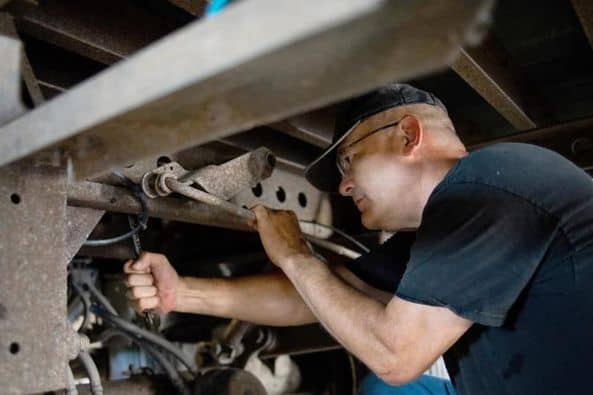
Every week, someone needs to get under these trailers and actually look at what’s happening. Check the hitch ball for wear, cracks, or deformation. A worn hitch ball compromises your entire connection system. Inspect lug nuts for proper torque—loose lug nuts are a leading cause of wheel separation incidents that turn into highway catastrophes.
Examine the wheel hub assemblies for signs of heat damage, leaking grease, or unusual play. Wheel bearings that aren’t properly maintained will fail, and when they do, you’re looking at bent axles, destroyed hubs, and potentially a completely destroyed wheel assembly. The repair bill for a failed wheel bearing that causes secondary damage can easily exceed $3,000 per wheel position.
Monthly Comprehensive Inspections
Once monthly, your maintenance team needs to conduct the inspections that prevent the expensive failures. This means getting trailer tires off the ground and checking tread depth, sidewall condition, and age. Trailer tires have a service life that extends beyond tread depth—rubber degrades over time regardless of miles. Most manufacturers recommend replacement at six to seven years regardless of appearance.
The trailer brake system requires monthly attention. Check brake pad or shoe thickness, inspect hydraulic lines for leaks or damage on hydraulic systems, and verify that electric brake controllers are properly calibrated on electric systems. Brake failures don’t just risk accidents—they expose your company to massive liability if an incident occurs with documented brake deficiencies.
Monthly inspections should also address corrosion. Trailer frames, crossmembers, and suspension components constantly battle moisture, road salt, and chemical exposure. Take active steps to prevent corrosion through regular washing, inspection of vulnerable areas, and application of protective coatings to bare metal. Once corrosion establishes a foothold in structural components, repair costs escalate dramatically.
Quarterly and Annual Service
Every quarter, wheel bearings need to be repacked or replaced per manufacturer specifications. This single maintenance item prevents more catastrophic failures than almost any other. Don’t skip it. Don’t extend it. Follow the schedule.
Annually, every trailer should receive a comprehensive inspection that includes suspension component examination, electrical system testing, structural integrity assessment, and verification that all safety systems function as designed. This is also when you should review your owner’s manual specifications and verify that you’re meeting all manufacturer recommendations.
Special Considerations for Specialized Equipment
While standard cargo trailers follow these protocols, operations running boat trailers or other specialized equipment face additional challenges. Boat trailers spend significant time submerged in water, dramatically accelerating corrosion and wheel bearing contamination. These units require more frequent bearing service and aggressive corrosion prevention measures.
Regardless of your trailer type, the fundamentals don’t change: systematic inspection, preventive maintenance, and immediate attention to identified problems.
The Maintenance Culture That Protects Your Bottom Line
Here’s what separates operations that control maintenance costs from those that hemorrhage money on emergency repairs: culture. Your drivers, mechanics, and managers must all understand that trailer safety and maintenance aren’t someone else’s problem—they’re everyone’s responsibility.
Drivers who report potential problems should be recognized, not hassled about taking equipment out of service. Mechanics who catch developing issues during routine service should be valued for their attention to detail. Managers who enforce maintenance schedules despite delivery pressure should be supported by ownership.
The trailer that breaks down on the highway because someone skipped an inspection to save an hour? That costs infinitely more than the hour you saved. The lawsuit that follows an accident caused by defective trailer brakes you knew needed service? That can end your business.
Your Action Plan Starts Now
If your operation doesn’t have a documented, enforced trailer maintenance program, you’re operating on borrowed time. Here’s what needs to happen immediately:
Pull your fleet maintenance records and honestly assess compliance. Identify every trailer that’s overdue for service. Create a realistic schedule to bring every unit current. Develop written maintenance protocols that specify inspection frequency, checklist items, and responsibility assignments. Train every driver on daily inspection requirements and provide them with the tools they need, including tire pressure gauges, flashlights, and inspection checklists.
Most critically, establish accountability. Someone in your organization must own trailer maintenance compliance. This person needs authority, resources, and direct reporting to leadership. Equipment condition can’t be an afterthought that gets attention when convenient.
The Bottom Line
Commercial trailer maintenance isn’t glamorous. It doesn’t generate revenue. It’s easy to defer when schedules are tight and budgets are stretched. But neglect trailer maintenance, and you’re building a house of cards that will collapse at the worst possible moment.
Every dollar invested in preventive maintenance returns multiples in avoided emergency repairs, reduced downtime, extended equipment life, and eliminated accident liability. Every hour spent on systematic inspection prevents days of disruption from breakdowns and failures.
The fleet managers and trailer owners who understand this truth run safer, more profitable operations. They sleep better knowing their equipment won’t fail their drivers. They avoid the crisis management that defines poorly maintained fleets.
Check your trailer. Follow your maintenance schedule. Address problems immediately. Your drivers, your customers, your bottom line, and your conscience will all thank you.
The question isn’t whether you can afford to maintain your trailers properly. The question is whether you can afford not to.